

Clinical Intelligence for the Next Era of Care.
People & Perspective
People & Perspective
Clinical Intelligence for the Next Era of Care.
Overview
Overview
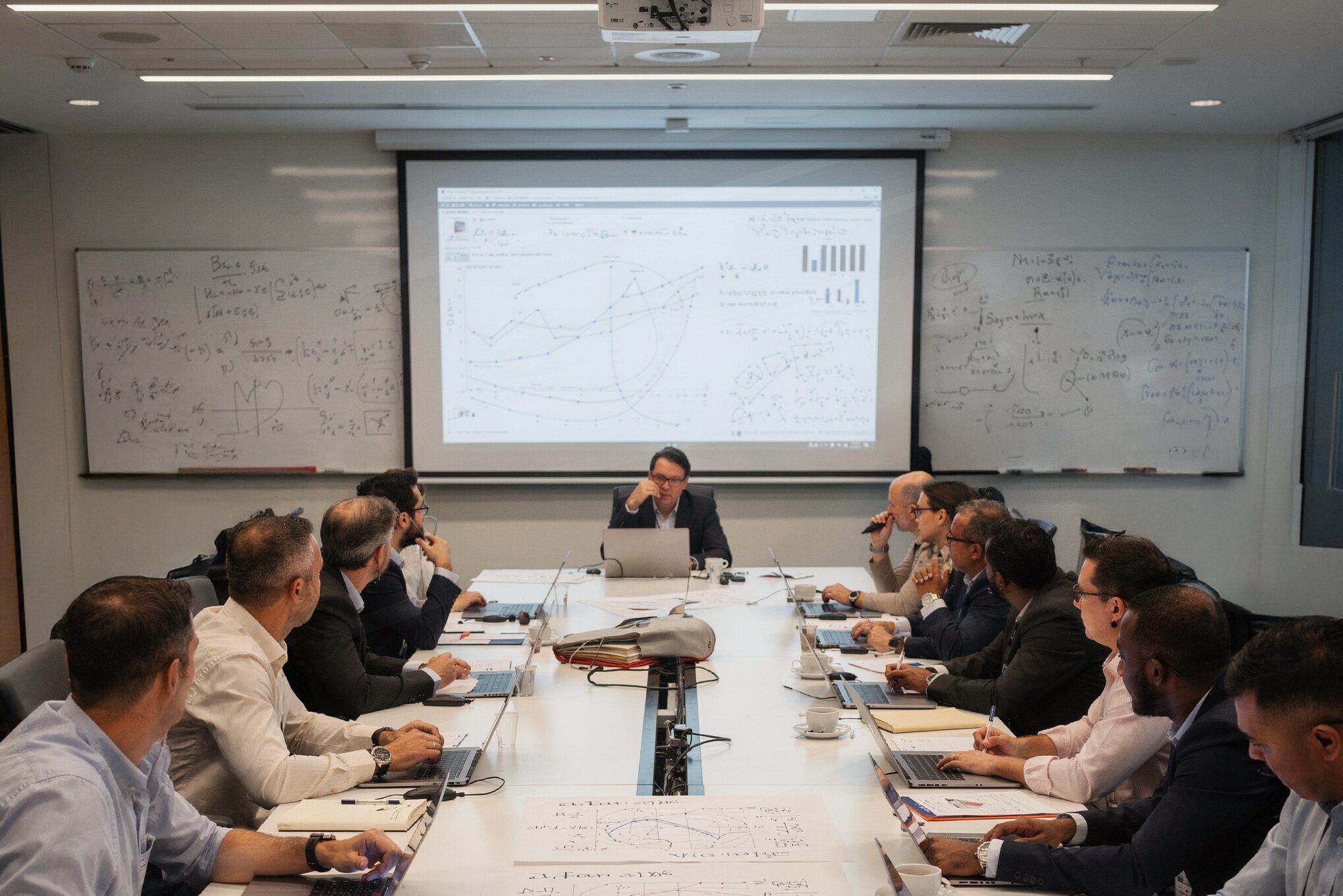
Patient Encoding Neural Networks Clinical Lab is a computational research lab with expertise spanning clinical domain science, cohort analytics, statistical inference, and machine learning. Work focuses on patient encoding, subtype structure, time-indexed outcomes, and mechanism-linked association patterns across neuroimmune cognition, gut brain programs, neurology, and oral-systemic inflammation, with evaluation centered on reproducibility and validation across cohorts.
Team Infrastructure
The lab is supported by a team spanning clinical collaborators, research staff, and computational specialists. The group maintains study operations, data integrity, and analytical development so that projects move from cohort intake to validated results with consistent standards
CLINICAL AND SCIENTIFIC COLLABORATION
Team Lead: Antonio Moreno
Clinical and scientific collaborators help define phenotype constructs, choose endpoints, and interpret subgroup structure in domain context. This group supports cohort framing, aligns measurement anchors across studies, and reviews results for plausibility and translational relevance.
RESEARCH OPERATIONS
Team Leads: Jun Li, PhD and Robert Abrams, PhD
Research team conduct day-to-day study execution, including capture of longitudinal measures, study design and inference, multivariate and regression modeling, interaction testing, and sensitivity analyses. A focused modeling group also develops neural architectures for patient encoding and multimodal learning. The team tracks completeness and manages handoffs between collection and analysis so datasets remain consistent across timepoints.
DATA ENGINEERING
Yan Zhou, PhD
Build and maintain the interface that convert raw inputs into structured datasets used for inference. This includes harmonization, feature construction, and reusable tooling for time-indexed cohort assembly.
MACHINE/REPRESENTATION LEARNING
Interim Lead: Ruchita Sharma
Developing embedding methods, clustering workflows, and longitudinal prediction models aligned to the clinical lab portfolio.
DATA QUALITY
Stefan Schmidt
Dedicated data quality function maintains validation rules and release standards.
The lab is supported by a team spanning clinical collaborators, research staff, and computational specialists. The group maintains study operations, data integrity, and analytical development so that projects move from cohort intake to validated results with consistent standards.
CLINICAL AND SCIENTIFIC COLLABORATION
Team Lead: Antonio Moreno
Clinical and scientific collaborators help define phenotype constructs, choose endpoints, and interpret subgroup structure in domain context. This group supports cohort framing, aligns measurement anchors across studies, and reviews results for plausibility and translational relevance.
RESEARCH OPERATIONS
Team Leads: Jun Li, PhD and Robert Abrams, PhD
Research team conduct day-to-day study execution, including capture of longitudinal measures, study design and inference, multivariate and regression modeling, interaction testing, and sensitivity analyses. A focused modeling group also develops neural architectures for patient encoding and multimodal learning. The team tracks completeness and manages handoffs between collection and analysis so datasets remain consistent across timepoints.
DATA ENGINEERING
Yan Zhou, PhD
Build and maintain the interface that convert raw inputs into structured datasets used for inference. This includes harmonization, feature construction, and reusable tooling for time-indexed cohort assembly.
MACHINE/REPRESENTATION LEARNING
Interim Lead: Ruchita Sharma
Developing embedding methods, clustering workflows, and longitudinal prediction models aligned to the clinical lab portfolio.
DATA QUALITY
Stefan Schmidt
Dedicated data quality function maintains validation rules and release standards.
Emerging Research Directions

Post-infectious cognitive recovery trajectories and recurrence risk modeling

Subtype structure in early cognitive decline with progression aligned endpoints

Gut brain stratification using microbial, inflammatory, and symptom time series features when available

Neurology programs including migraine phenotype structure, MS fatigue strata, epilepsy trigger profiles, and post-stroke cognitive outcomes
Emerging Research Directions
What’s Being Explored Now
Post-infectious cognitive recovery trajectories and recurrence risk modeling
Subtype structure in early cognitive decline with progression aligned endpoints
Gut brain stratification using microbial, inflammatory, and symptom time series features when available
Neurology programs including migraine phenotype structure, MS fatigue strata, epilepsy trigger profiles, and post-stroke cognitive outcomes
Contact Us
Have questions or want to collaborate? Reach out to our team to learn how we can support your research goals or cohort studies.
Patient Encoding Neural Networks Clinical Lab
1 Belmont Ave,
Bala Cynwyd, PA 19004


Contact Us
Have questions or want to collaborate? Reach out to our team to learn how we can support your research goals or cohort studies.
Patient Encoding Neural Networks Clinical Lab
1 Belmont Ave,
Bala Cynwyd, PA 19004
